How to Show Up in AI Search as a Wedding Vendor (Before Everyone Else Catches On)
The robots are not taking over… but they are taking notes

There’s a quirky shift happening in how couples find their wedding vendors. If you’ve been paying attention to the World Wide Web: you’ll have noticed that humans are outsourcing their research to AI, and the wedding world isn’t immune.
You might have felt the shift in your inbox.
A few enquiries are starting to feel… different. Couples arrive warmer, clearer, already half-decided. They reference things you haven’t explicitly spelled out. They seem to understand your style, your process, even your pricing range before you’ve had the chance to explain it.
It can feel like they’ve done hours of research.
Even though they haven’t.
They’ve asked AI a question, and you showed up in the results.
Something like, “Best celebrant in Perth who isn’t awkward and can keep it light but meaningful.” Instead of scrolling through ten websites, they’re given a short, confident answer. A handful of options. A summary that feels suspiciously helpful.
So naturally, the question creeps in: are the robots about to take over?
Short answer? No.
Longer answer? They’re not taking over your business, but they are becoming the world’s most efficient research assistant. And right now, they’re powerfully directing who gets recommended before a couple ever lands on your website.
What AI Search Actually Is (Without the Tech Headache)
AI search is what happens when someone asks a question and gets an answer (from an eerily intelligent tool), not a list of links.
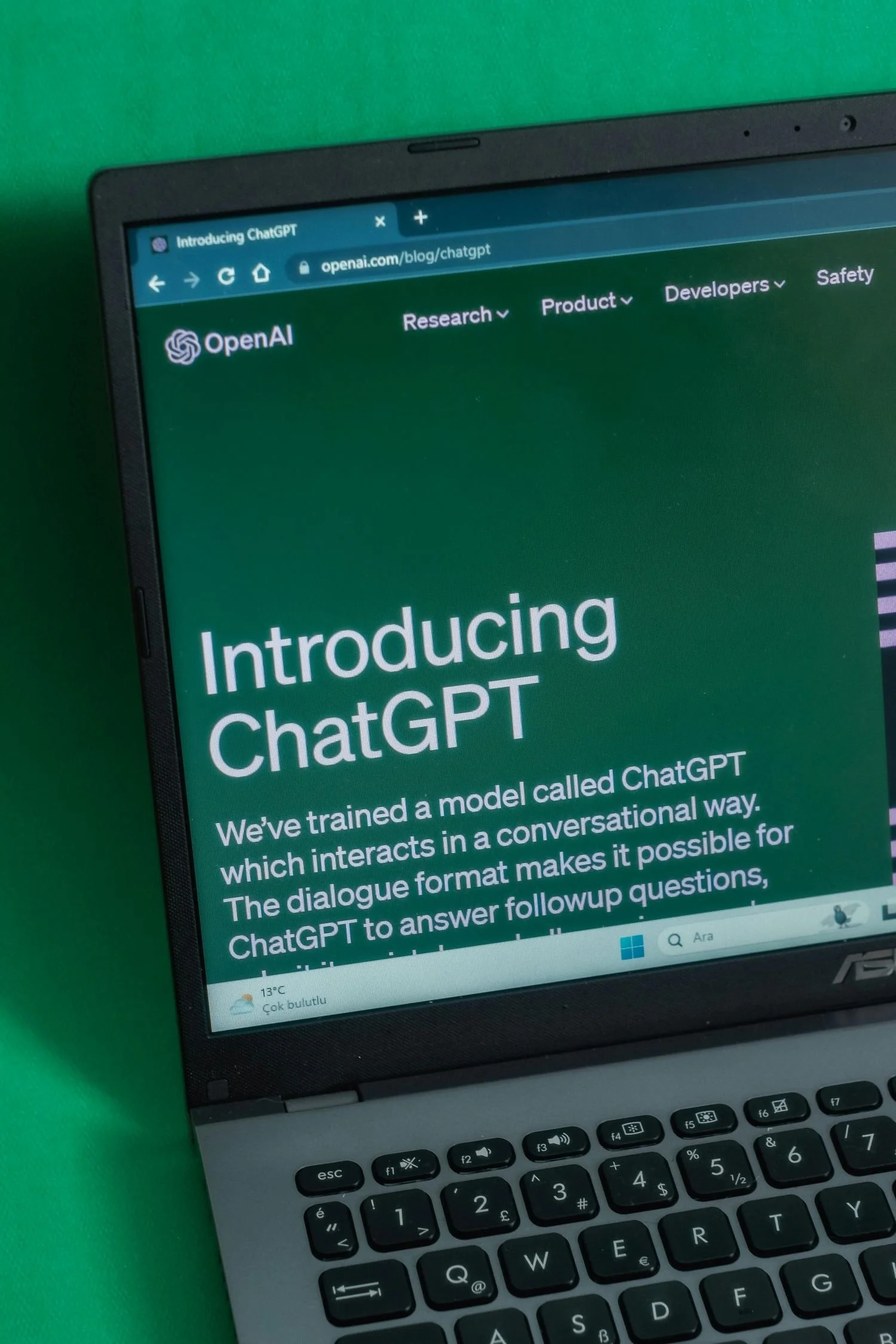
Tools like ChatGPT, Google Gemini, and Perplexity AI scan across multiple sources and summarise what they find. Instead of saying, “Here are ten websites, good luck,” they say, “Here are a few options that match what you’re looking for.”
For wedding vendors, this is a subtle but important shift. You’re no longer just trying to rank on Google. You’re now trying to be understood well enough to be included in AI’s answer.
And those are not the same game.
Why AI Search Matters for Wedding Vendors (Right Now)
This isn’t a future trend. It’s already woven into how couples plan.
Platforms like Zola have reported that a growing number of engaged couples are using AI tools during the research phase. Not because they’re particularly tech-savvy, but because they’re overwhelmed. Wedding planning is a 47-tab sport, and anything that reduces that mental load gets adopted quickly.
So instead of opening ten browser tabs, couples are asking one well-phrased question and getting a curated answer.
That answer becomes their starting point.
Which means if your business is clear, consistent, and easy to interpret across your website, social media and directory listings, you’re far more likely to be included. If it’s vague, scattered, or trying to sound clever instead of clear, you’re… not.
The robots are ruthless about clarity.
How Couples Are Actually Using AI (And Why It Works So Well)
Couples aren’t using AI in a polished, strategic way. They’re using it the same way they text their friends — quickly, casually, and often a little emotionally.
They ask things like, “Do we actually need a wedding planner?” or “Find me a photographer who won’t make us feel awkward.” They describe what they want in human terms, not industry language.
This is why AI feels so effective. It translates messy, emotional questions into clear, confident suggestions.
And importantly, it does this early. Before enquiries. Before shortlists. Before your website even gets a chance to show those gorgeous images… AI is shaping who gets considered.

The Big Shift: From Ranking to Being Recommended
Traditional SEO taught you to think in positions. Page one, top three, rankings, keywords. AI works differently. It isn’t asking where your website should sit. It’s asking who it can confidently recommend.
That requires something more fundamental than optimisation. It requires clarity.
AI doesn’t reward the most creative business, the most poetic brand, or the most beautifully designed homepage. It rewards the business it can understand quickly and describe accurately.
If your positioning is clear, you become easy to recommend. If it’s not, you become hard to summarise — and therefore easy to skip.
The Inside Scoop: Your Digital Footprint Is Doing the Talking
Here’s the powerful inside scoop…
AI is not just reading your website. It’s reading your entire digital footprint.
That includes your website, your Google Business Profile, directories, blog content, reviews, and any mentions of your business across the internet. It pulls these threads together to form a picture of who you are and what you do.
And this is the framework worth remembering:
Your website is what you say about yourself.
Your digital footprint is what the internet ecosystem thinks about you.
AI looks for consistency across that picture. If multiple sources describe you in the same way, your positioning becomes stronger. If everything sounds slightly different — different tone, different focus, different language — the signal weakens.
You’re not being judged. You’re just not being clearly understood.
You’re Not at the Mercy of AI — You’re Training It
Ok, let’s calm down – I know it’s a lot, but this is not the robot apocalypse.
You are not trying to “beat” AI. You are feeding it information.
Every time you clearly state what you do, who you’re for, and where you work, you’re giving it something usable. Every time your messaging aligns across your website, your Google profile, and your content, you’re reinforcing that signal. Every time a client leaves a review or your work is mentioned elsewhere, you’re adding credibility to the picture.
You are (whether you realise it or not) training AI how to talk about your business.
Which means you’re not ruled by the robots. You’re teaching them.

How to Show Up in AI Search (Without Becoming a Tech Person)
I know you’re expecting this to be complicated. It isn’t.
It comes down to a handful of fundamentals, done well and done consistently.
Start by being unmistakably clear about what you do. Not poetic, not vague, not “elevated.” Clear. If you’re a Perth wedding celebrant specialising in relaxed, story-driven ceremonies, say exactly that. That clarity is what allows AI to place you correctly.
Next, make sure your positioning is consistent everywhere. Your website, your Google profile, and your directory listings should all sound like the same business. When those signals align, trust builds — both for AI and for the humans reading it.
Then, answer real questions through your content. The kinds of questions couples are already asking late at night. This is what AI pulls from when it builds answers, and it’s where most vendors have an advantage without realising it.
Finally, build proof around your business. Reviews, testimonials, features, mentions. These are not just “nice to have” elements; they’re part of how your credibility is assessed across the web.
None of this requires technical expertise. It requires clarity, consistency, and a willingness to say things plainly.

The Opportunity Most Wedding Vendors Will Miss
(But Not You, Clever Cookie)
Right now, most wedding vendors are not thinking about AI search. They’re focused on Instagram, maybe Google if they’re ahead of the curve.
Which means this space is still wide open.
The vendors who consciously get clear, consistent, and structured now will be the ones AI tools learn to recommend. Not because they gamed anything, but because they made themselves easy to understand.
And in a system designed to reduce overwhelm, ease wins.
Final Thought: This Isn’t About Technology. It’s About Clarity
If all of this feels new and a little bit frightening, that’s completely fair. But the takeaway is far simpler than the headline suggests.
You don’t need to master AI. You don’t need to chase every new platform or tool. You don’t need to become “techy. You need to be clear about what you do, who you’re for, and how you work — and say it consistently across your business.
Because the vendors who are easiest to understand are the ones that get recommended.