Most wedding vendors aren’t boring. In fact, they’re usually vibrant, creative, slightly chaotic (in the best way), emotionally intelligent and bursting with stories from the behind-the-scenes trenches of other people’s happiest days. Yet their websites often read like they belong to an accountant’s office. No offence to accountants (we love those guys).
The problem isn’t the work or the brand.
It’s the copy (aka your messaging).
Copywriting is the part of your business that carries the emotional tone.
It creates connection.
It reveals personality.
It builds desire.
It makes someone think, “We’d get along” before you ever exchange a single email. When your website feels flat, disconnected or vaguely beige, it usually means the romance is missing. And romance is the difference between someone skimming your site and someone imagining themselves inside your experience.
Romance in copy doesn’t mean poetic fluff or sweeping metaphors. It simply means writing in a way that feels warm, human and emotionally attentive.
According to research published in Harvard Business Review, emotionally resonant content dramatically increases engagement and loyalty because people respond more powerfully to feelings than facts.
So let’s talk about how to infuse that warmth into your website without sounding dramatic or overly flowery, and without sacrificing clarity or professionalism.
This is romance with intention.

Start by Writing Benefits, Not Features
One of the easiest ways to create emotional resonance is to shift your focus from what you do to what your couple feels when you do it well. This is the backbone of conversion copywriting.
Most vendors describe features first.
Eight hours of coverage. Ceremony scripting. Five bridal bouquets. A planning meeting.
But couples don’t fall in love with logistics. They fall in love with outcomes.
Eight hours of coverage becomes the comfort of knowing nothing will be missed.
A ceremony script becomes the reassurance that their story will sound like them.
Bridal bouquets become part of the atmosphere they’re dreaming about.
When you frame your work through the lens of experience, it naturally becomes more emotional and more compelling. This approach isn’t sentimental. It’s strategic.
Benefit-driven writing converts dramatically better because it’s centred on the reader, not the business.
Write Like You’re Talking to Them, Not About Yourself
Many wedding vendors make the same mistake. Their website becomes an autobiography.
“I love capturing love.”
“I’m passionate about weddings.”
“I strive to create beautiful moments.”
It’s not wrong. It’s just not effective.
Couples aren’t visiting your website to learn about your passion. They want to feel understood. They’re asking, quietly and subconsciously, “Will we be safe with you?” The quickest way to answer that is to shift the spotlight from you to them.
Instead of “I”, use “you”.
“You’ll feel supported through the parts of planning you’re dreading.”
“You’ll have photos that look like memories, not poses.”
“You’ll have space to enjoy your day without worrying about details.”
When your website reads like a conversation, not a résumé, your couples relax.
And relaxed couples enquire.
Seduce Them With Your Headings
Most visitors don’t read websites top to bottom. They skim. They scan. They hover over headings like birds deciding whether to land. If your headings don’t promise something compelling, they’ll move on.
A heading isn’t a label. It’s an emotional hook.
It should offer clarity and flavour in the same breath.
There’s real science behind this. Heatmap studies from Nielsen Norman Group show that people fixate on headings before anything else, often deciding within seconds whether to keep reading or click away.
A strong heading doesn’t need to be clever, but it should be evocative and speak to your ideal couple’s fears or aspirations.
“Photography for people who want to feel present.”
“Florals designed to feel alive.”
“Ceremonies that sound like your heart, not a template someone printed in 2007.”
Good headings create micro-moments of emotional recognition. And those moments create connection.
Use Layout and UX to Support the Feeling You’re Creating
Romance isn’t only in the words. It’s in the experience of reading them.
Copy needs space to breathe. White space is one of the simplest ways to make your writing feel elegant, clean and confident. UX (user experience) research indicates that adequate white space enhances comprehension and lends content a higher quality feel.
Cluttered text feels frantic. Spacious text feels considered.
Similarly, dot points can be a gift when they clarify rather than overwhelm. They introduce rhythm and simplicity, helping skimmers absorb information without friction. But they should never replace storytelling. They’re seasoning, not the meal.
A conversational tone matters too. Couples don’t want to decode jargon or feel like they’re reading a university essay. They want to understand you quickly and trust you easily. Warm copy builds that bridge.
CTAs Should Feel Like Invitations, Not Instructions
A call to action is more than a button at the end of a page. It’s the moment where curiosity turns into commitment, and tone matters just as much as clarity.
A word like “Submit” feels transactional and distant, almost like filing paperwork. But when your CTA sounds like an invitation, something shifts. Phrases such as “Check your date” or “Start your enquiry” feel gentle and open, while something more expressive like “Let’s make something beautiful together” carries warmth and personality.
Research from HubSpot shows that small shifts in CTA language can significantly influence conversions because readers respond differently depending on how supported or understood they feel in that moment.
When your CTAs sound human rather than functional, you lower the emotional barrier that often stops couples from taking the next step. A well-written CTA doesn’t push or pressure. It simply invites. And that kind of invitation is, in its own subtle way, a form of romance.
Stop Copying the Language You See Everywhere Else
Many wedding vendors fall into the trap of sounding exactly like everyone else, and it happens so subtly that they barely notice it. They borrow the same phrases, the same polished yet generic tone and the same comforting but overused language that fills half the industry. The problem isn’t that these lines are wrong; it’s that they’re indistinguishable. Couples aren’t looking for something that blends in. They’re looking for a voice that resonates with them, one that feels specific and alive.
Romance in copy comes from individuality. It comes from details, from perspective, from honesty that feels warm rather than rehearsed. When you write the way you actually speak, something shifts—your personality surfaces. Your quirks become part of your charm. You stop sounding like a template and start sounding like a person they could imagine working with.
Specificity is inherently romantic because it shows that you notice things. Honesty is romantic because it feels grounded rather than performative. And personality is romantic because it gives couples the sense that there is a real human behind the brand. When your copy reflects all of this, it doesn’t need to compete or shout. It becomes unmistakably yours, and that uniqueness is what makes the right couples lean in.
Adding Romance Without Becoming Cheesy
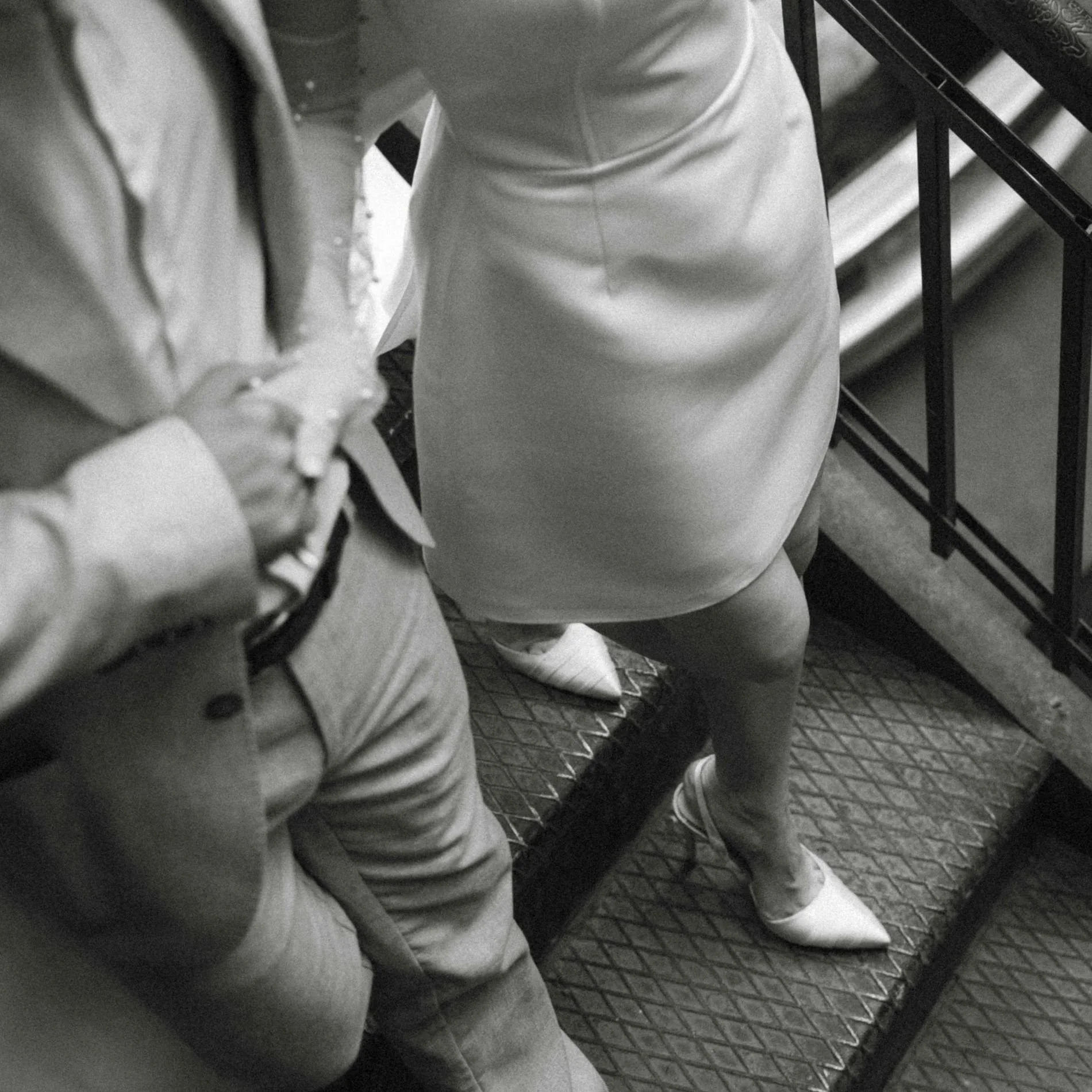
Romantic copy isn’t about big emotions or dramatic flourishes. It’s far more subtle than that. True romance in writing comes from paying attention, noticing the tiny moments that make weddings feel alive. Every celebration is built from these micro-moments, the ones that happen quietly and almost invisibly. The stillness right before someone walks down the aisle. The nervous laugh that escapes during the vows. The warmth that spreads through a room when guests reunite after months apart. The soft anticipation that settles just before the music begins.
When you weave these kinds of details into your copy, you bring a depth of humanity to your work that couples instinctively recognise. You’re not trying to write a novel or create sweeping poetic scenes. You’re simply showing that you understand weddings on a level that goes beyond logistics. You’re showing emotional intelligence.
This is why specificity creates romance. Not sentimentality, not exaggeration, not reaching for metaphor simply to sound lyrical. Romance appears when your writing reflects truth delivered with care. Couples don’t need grand declarations. They need to feel seen. And the right detail, offered gently, does more heavy lifting than any dramatic prose ever could.

Conclusion
Your website isn’t boring.
It’s simply waiting for its voice.
When your copy becomes warmer, clearer and more emotionally attuned, couples don’t just understand what you offer. They feel it. They imagine themselves inside your experience. They recognise themselves in your words before they even enquire.
That is romance.
And that is the real difference between a website people skim past and a website people fall in love with.