(Spoiler: it’s not your font choice)
There is a particular kind of Tuesday that most wedding vendors will understand.
It begins with a very reasonable intention, something like, “I’ll just refresh my branding.” It ends with seventy-two tabs open on Creative Market, a Pinterest hangover, and a desktop folder named “Brand Inspo Final FINAL_v7.”
Somewhere around hour six, you’re zooming in on two nearly identical serif fonts like a forensic investigator. You’re toggling between beige shades that look exactly the same until you put them next to a different beige. You’re trying to capture that “lux heritage” feel without accidentally drifting into “law firm in 2009.”
And honestly, I get it. Branding matters. It’s not fluff. It’s not decoration. It’s part of how you build recognition, cohesion, and trust.
But here’s the question worth asking, especially if your work is already excellent.
Is the high-end feeling coming from the packaging… or from what’s wrapped up inside?
Because couples don’t experience your brand like you do. They don’t care that you chose a European-feeling serif that “feels like Vogue meets Sicily.” They care about something far more practical and far more emotional: Will this be easy? Will this feel safe? Do I trust these people? Can I picture myself here?
“High-end” online is less about aesthetics, and more about the signals that make choosing you feel obvious.
Let’s talk about the ones that actually move the needle.
What “High-End” Really Means Online
Most people treat “high-end” like it’s a visual style. Clean layout. Minimal colours. Editorial imagery. A tasteful sprinkle of whitespace.
But high-end is not a look. It’s a felt experience.
It’s the quiet confidence a couple feels when they land on your site and think: Oh. This is it. Not because it’s trendy, but because it’s clear. It’s calm. It’s coherent. It’s guided.
In other words, high-end is the sum of micro-signals that communicate three things quickly:
Your work is excellent.
Your process is solid.
Choosing you won’t be stressful.
You can get there with beige and plum or neon and chrome, by the way. High-end isn’t a colour palette. It’s competence with taste.
The First Real “High-End” Signal: Restraint
Most vendors think looking high-end online means showing more. More galleries. More photos. More features. More proof.
But more is rarely what luxury looks like. More is what anxiety looks like.
Curation is one of the strongest high-end signals you can send, precisely because it requires confidence. When you show everything you’ve ever done, you’re not communicating abundance, you’re communicating uncertainty about what matters most.
High-end vendors edit like publishers. They choose hero work and let it breathe. They don’t need to prove they’ve done weddings. They show the ones they want to be hired for again.
This matters because couples aren’t just browsing for pretty. They’re trying to work out if they belong in your world. Too many visuals without a clear story creates cognitive load. It feels like walking into a boutique where every surface is covered in products and you don’t know where to look. Even if everything is gorgeous, it’s tiring.
Restraint does something powerful: it creates space for certainty to land.
The Second Signal: Clarity (Because Wealthy Doesn’t Mean Patient)
Here’s a sneaky truth about “high-end” clients: they are often the least forgiving of confusion.
Not because they’re fussy. Because they’re time-poor. They’re decision-fatigued. They’re comparing you against several other vendors in the same sitting. If your website makes them work to understand what you do, where you’re based, or what happens next, they don’t slow down to decode you. They click away.
Clarity is not “basic.” Clarity is professional.
The high-end feeling comes from how quickly a couple can orient themselves. A clear headline. A clear location. A clear path forward. A sense that you’ve thought about what they need to know first, second, third.
If your website requires a couple to scroll, squint, and interpret, you’re not creating luxury. You’re creating friction.
And couples don’t enquire through friction. They enquire through confidence.
Leadership Is The Real Luxury Signal
If I could put one thing on a billboard for wedding vendors, it would be this:
High-end clients don’t want to co-design your process.
They do not want to become project managers for their own wedding vendor team. They want to feel held. Guided. Led.
A high-end website feels like someone competent is behind it. It communicates that your process is designed, not improvised. That you have a way you do things for a reason. That you’ll take care of the details, and they won’t have to chase you for clarity or reassurance.
This is where so many gorgeous websites fall down. They focus on aesthetic mood, but avoid specificity, because specificity feels scary. It can feel like it will “put people off.” But leadership is exactly what draws the right people in.
A high-end site answers the questions couples are too polite to ask:
How does this work?
What happens next?
What do you need from me?
What do you handle?
How do I know this will go well?
If your website makes those answers feel obvious, you don’t just look high-end. You feel safe.
Pricing Confidence (Not Secrecy)
Let’s be blunt… lovingly.
“No pricing” is not a luxury strategy. It’s a risky strategy.
You don’t need a full price list. But you do need context. Because couples aren’t just looking for a number, they’re looking for certainty. They’re trying to work out whether reaching out will be a comfortable experience or an awkward one where they feel embarrassed for asking.
A high-end brand signals price with confidence. It gives couples enough information to self-select without fear. A starting point. A minimum spend. A “most couples invest…” range. Anything that says: You’re not stepping into a mystery box.
Secrecy doesn’t read premium. It reads like you’re bracing for a difficult conversation.
Confidence reads premium. Even when the numbers are high.
The ‘Same Person Everywhere’ Test
Your website doesn’t live alone. It has roommates.
Instagram. Google Business Profile. Venue listings. Directories. Tagged posts. Screenshots in bridal group chats. Recommendations where someone says, “She’s amazing, but her website is confusing.”
Couples are comparing you across platforms, often subconsciously. If your Instagram feels warm and clear, but your website feels stiff or vague, trust wobbles. If your website feels high-end, but your captions read like you’re apologising for taking up space, it creates a mismatch.
High-end brands feel cohesive because cohesion is reassuring. It tells the buyer: this is stable; this is considered; this is intentional.
Consistency isn’t boring. It’s a trust signal.
Branding Matters, But It’s The Wrapping — Not The Gift
Now, let’s come back to those seventy-two fonts.
Branding is important. Consistency is important. Authenticity is important. If your brand looks chaotic, it often signals chaos behind the scenes, even if you’re incredibly organised. Humans are pattern seekers. We read cohesion as competence.
And yes, I will always recommend investing in a brand designer if you can. A good brand designer doesn’t just make things pretty; they make them coherent. They build a visual system that supports recognition, and recognition builds trust faster than you think.
But branding on its own cannot manufacture a high-end feeling if the structure underneath is unclear.
A luxury brand is not a logo. It’s a decision experience.
If your messaging is vague, your process is hidden, your navigation is confusing, and your pricing context is missing, no serif font on earth is going to fix the hesitation that follows.
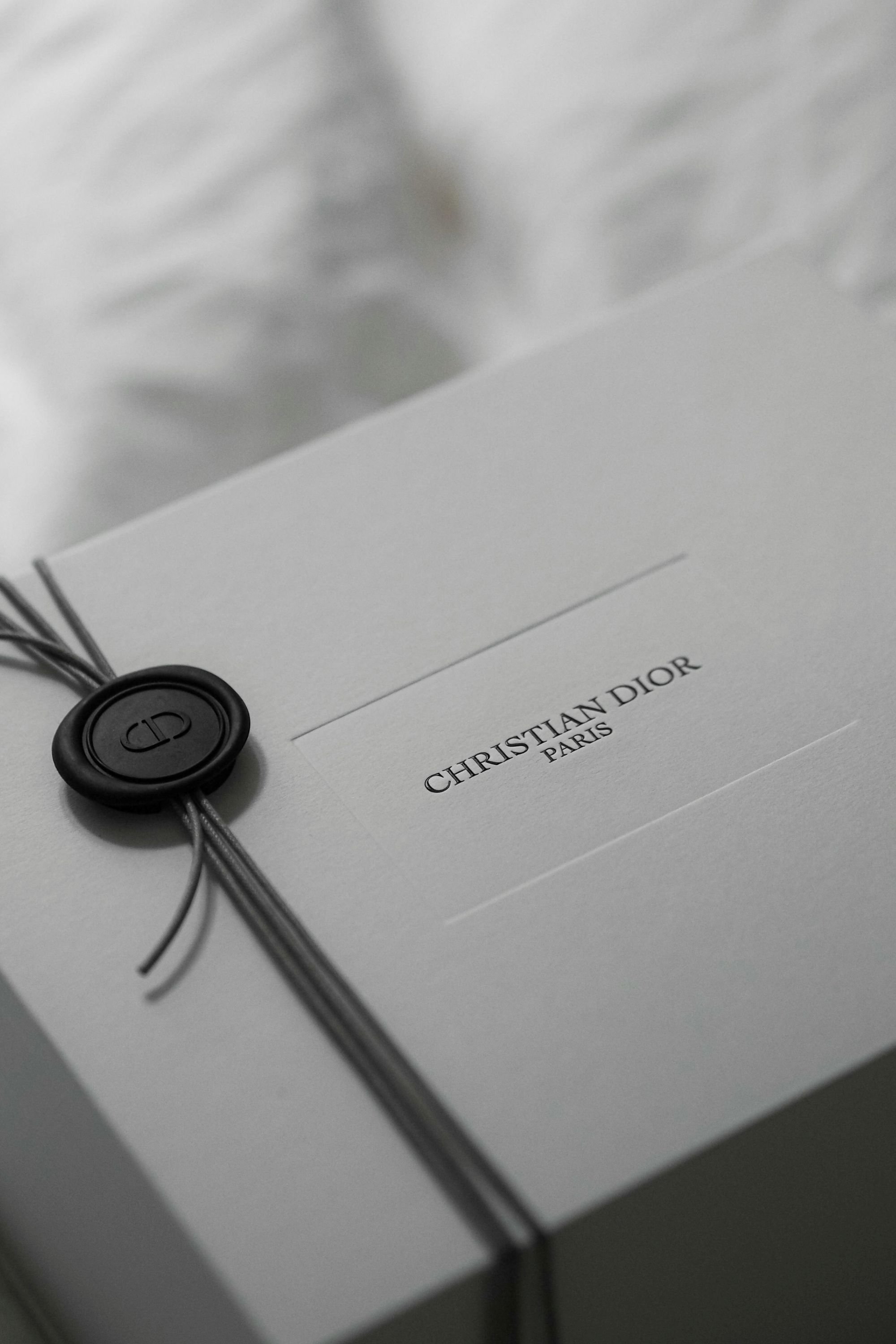
Branding is the wrapper. The experience is the gift. Couples are buying the gift.
What “High-End” Is Not
Just to save you from wasting another Tuesday:
High-end is not beige.
It’s not white space sprinkled randomly like fairy dust.
It’s not calling yourself “editorial” and hoping that carries the whole strategy.
It’s not hiding information to seem exclusive.
It’s not a portfolio so big it needs its own navigation bar.
High-end is the sensation that everything has been considered.
It’s confidence without arrogance.
It’s clarity without coldness.
It’s personality without oversharing.
The Checklist That Changes Everything
Here’s a simple way to know if you’re signalling “high-end” online, regardless of your aesthetic:
When a couple lands on your website, do they feel:
that you understand them,
that you know what you’re doing,
and that the next step is easy?
If yes, you’ll look high-end even without perfect branding.
If no, the branding will become a beautiful disguise for uncertainty.
And that’s the thing: couples don’t ghost because they’re careless. They ghost because something felt heavy. Something felt unclear. Something didn’t reduce risk fast enough.
High-end websites don’t reduce risk by seducing. They reduce it by guiding.
The Real Takeaway
If you want to look high-end online, stop asking, “Does this look expensive?” and start asking, “Does this feel easy to choose?”
Because the most luxurious signal you can send isn’t aesthetic.
It’s certainty.
And when your website communicates certainty, you don’t just attract more enquiries. You attract better ones. The kind that arrive already aligned, already trusting, already excited.
Not because your font was on-point.
Because your experience was clear.