What a Wedding Sales Funnel Actually Looks Like (and Why You Probably Don’t Have One Yet)
If you’ve spent more than 5 minutes on the internet, you’ve probably heard some marketing bro spouting off about sales funnels.
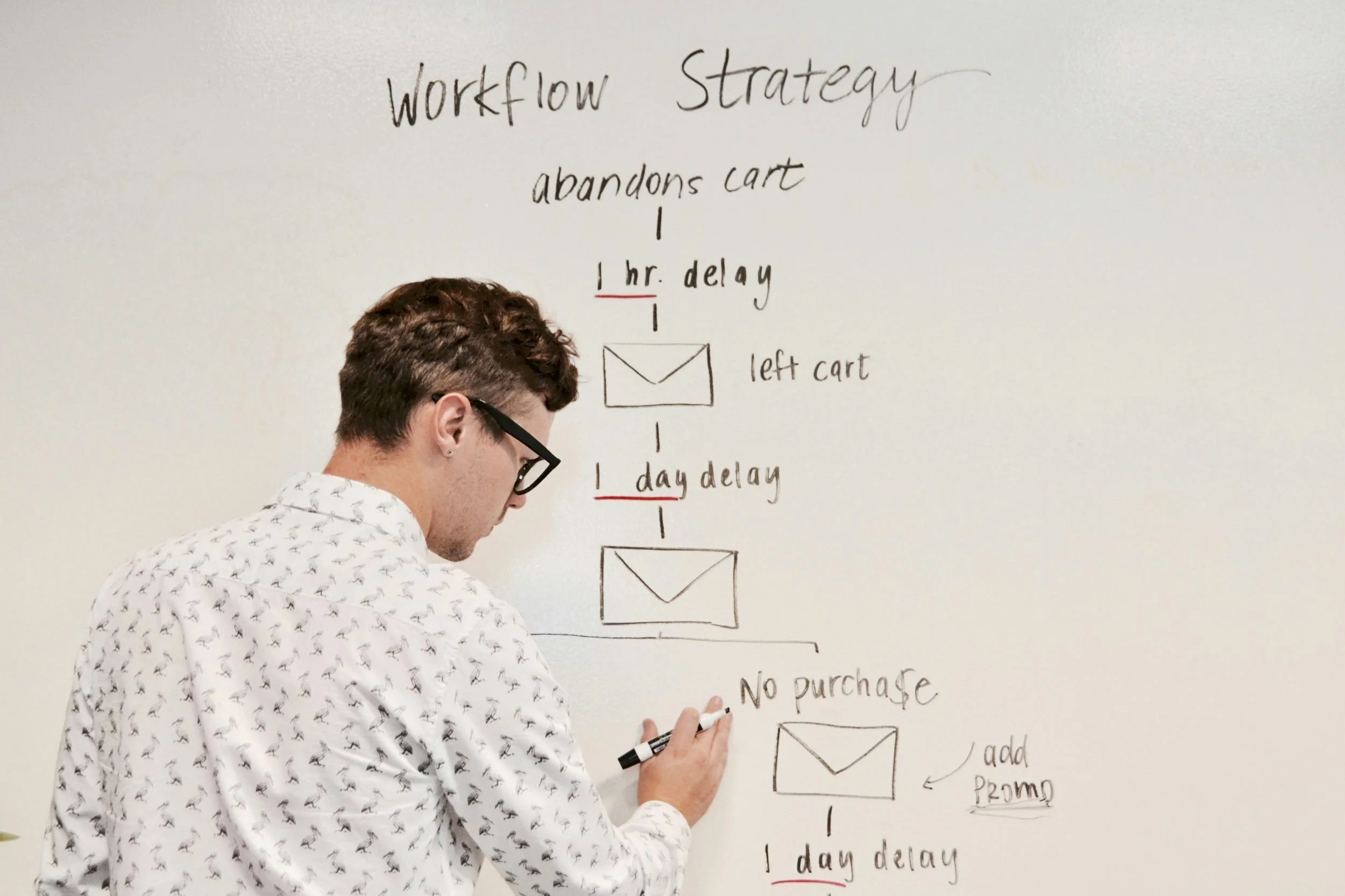
Usually whilst drawing an incomprehensible mess of arrows on a whiteboard, and promising that if you just “optimise your funnel,” everything in your business will magically fall into place.
It’s enough to make you back away and think, this probably isn’t for me. I’ll just keep posting on Instagram.
But here’s the inconvenient truth hiding underneath all that noise:
Most wedding vendors don’t have a visibility problem. They have a conversion problem.
That marketing bro kinda has a point.
People are already finding you. They’re liking your work. They’re even enquiring. But somewhere between “this looks promising” and “let’s book them,” the energy drops. Conversations lose momentum, decisions get delayed, and enquiries fade out without explanation.
That drop-off isn’t about luck, timing, or “bad leads.”
It’s structural.
Because what’s missing in most wedding businesses isn’t more content, more posting, or more exposure. It’s a clear, considered path that takes someone from discovering you to confidently choosing you.
That path is your sales funnel.
And when it’s working, everything feels lighter. Enquiries feel warmer. Conversations move faster. You spend less time chasing and more time working with people who already trust you.
When it’s not, it feels like you’re constantly almost booking.
So let’s strip away the jargon and look at what a wedding sales funnel actually is, what it looks like in real life, and why so many good vendors are losing bookings in the space between interest and action.
What a Sales Funnel Actually Is (In Human Terms)
Strip away the jargon, and a sales funnel becomes something far simpler than the marketing bros of the internet would have you believe.
It is the path a stranger takes from finding you, to trusting you, to choosing you.
In the wedding industry, that path isn’t neat or linear. It unfolds in ordinary, everyday moments. One person scrolling while the other half-watches a show. A saved post. A link sent in a group chat. A late-night “what do you think of this one?”
Your funnel is not a piece of software running in the background.
It’s the experience that meets people in those moments and helps them move forward with clarity instead of hesitation.
Why Most Wedding Vendors Don’t Actually Have a Sales Funnel
Does this sound familiar?
On paper, everything looks like it should work. You’ve got Instagram bringing people in. A website that explains what you do and showcases your work. A contact form that gives couples a way to reach out.
It feels complete… but what if it’s not?
What if it’s quietly leaking enquiries, rather than guiding them toward a confident yes?
Because most wedding businesses don’t have a true funnel, they have a collection of touchpoints that aren’t working together.
Couples find you, like what they see, and then… pause. Something is missing in the experience. There isn’t quite enough connection to feel invested. Not enough trust to feel safe. Not enough clarity to know what to do next.
And most importantly, they’re often not ready to book yet.
They’re still exploring, comparing, trying to make sense of their options. When the only next step is “enquire,” it feels like a leap they’re not prepared to take.
So they don’t.
They hesitate, open another tab, and keep looking.
That gap between interest and action isn’t accidental. It’s what happens when there’s no clear path guiding someone from curiosity to confidence. And that’s exactly what a real sales funnel is designed to solve.
What a Real Wedding Sales Funnel Looks Like
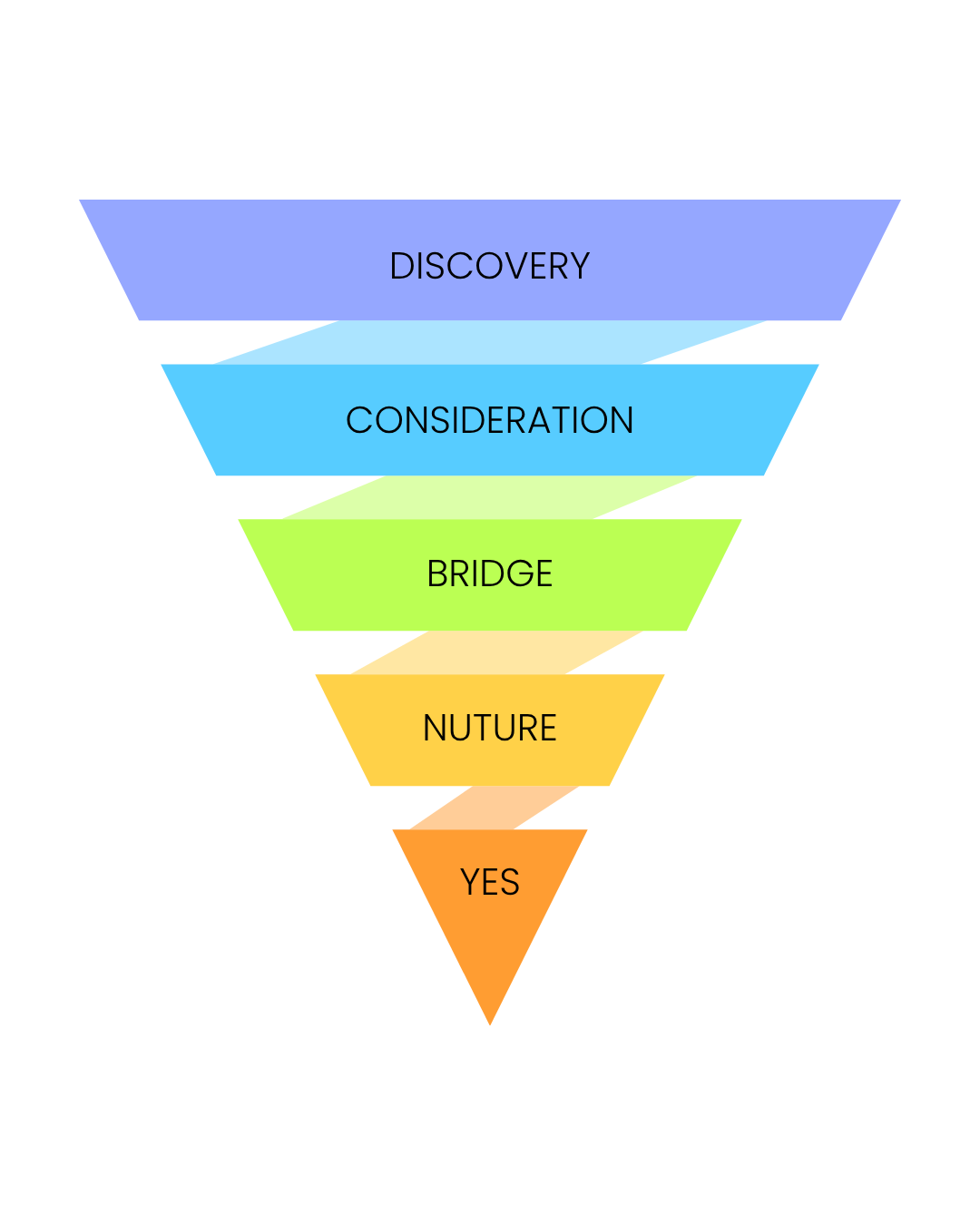
Once you see the structure, it becomes very clear where things are flowing and where they’re possibly breaking down. Think of the sales funnel like an actual funnel – wide at the top and narrow at the bottom. Our job is to guide couples from the top of the funnel (discovery) to the bottom of the funnel (the yes) by building content or marketing assets for each section. But to create the right content, we need to understand the psychology of each stage of the process.
Let’s break it down...
Top of Funnel - Discovery: The First Glimpse
This is where attraction happens. Instagram, Pinterest, Google, even AI. It’s fast, crowded, and full of distractions. Your job here is simple: be visible, be aligned, and give people a reason to click through.
Think of it as catching someone’s attention across a room. There’s interest, but no commitment yet.
What to create:
Instagram content (grid + reels)
Show your work, your style, your personality. This is where attraction happens.
Pinterest pins (your work + blog content)
Couples use Pinterest like a visual search engine. This is long-term discovery, not just daily posting.
SEO blog posts
These bring in couples who are actively searching for answers. Think: pricing, timelines, venues, FAQs.
Google Business Profile (fully optimised)
This gets you into local search results when couples are actively looking.
Why it matters:
If people can’t find you, nothing else matters. But visibility alone doesn’t book weddings—it just opens the door.
Middle of Funnel - Consideration: The Slow Look

When someone lands on your website, the energy changes. It’s quieter. More focused. They’re no longer browsing broadly; they’re assessing.
They’re asking themselves whether this feels like their kind of vendor. Whether your work reflects what they want. Whether your tone feels like someone they could trust.
This is where most vendors assume the decision is being made.
It isn’t.
Interest is just the beginning.
What to create:
A clear, strategic homepage
It should immediately answer: what you do, who you’re for, and where you’re based.
A high-converting services page
Not just inclusions—experience, outcomes, and who each option is for.A curated portfolio
Show the work you want more of, not everything you’ve ever done.
An about page that feels human
This builds connection and trust, not just credentials.
Pricing context (starting from / most couples invest)
Give enough clarity to reduce uncertainty.
Why it matters:
This is where couples decide whether to keep going or keep looking. If this stage feels vague, overwhelming, or unclear, they leave, even if they liked you.
Middle of Funnel - The Bridge: Where Most Funnels Break
Between liking your work and contacting you, there’s a space that often gets overlooked.
This is where couples are still figuring things out. Budget conversations, timelines, expectations, and family input. They’re not always ready to commit, even if they’re leaning in.
If the only option at this point is to enquire, you’re asking for a leap they haven’t prepared for.
A strong funnel offers something more considered. A step that feels smaller, safer, and more supportive.
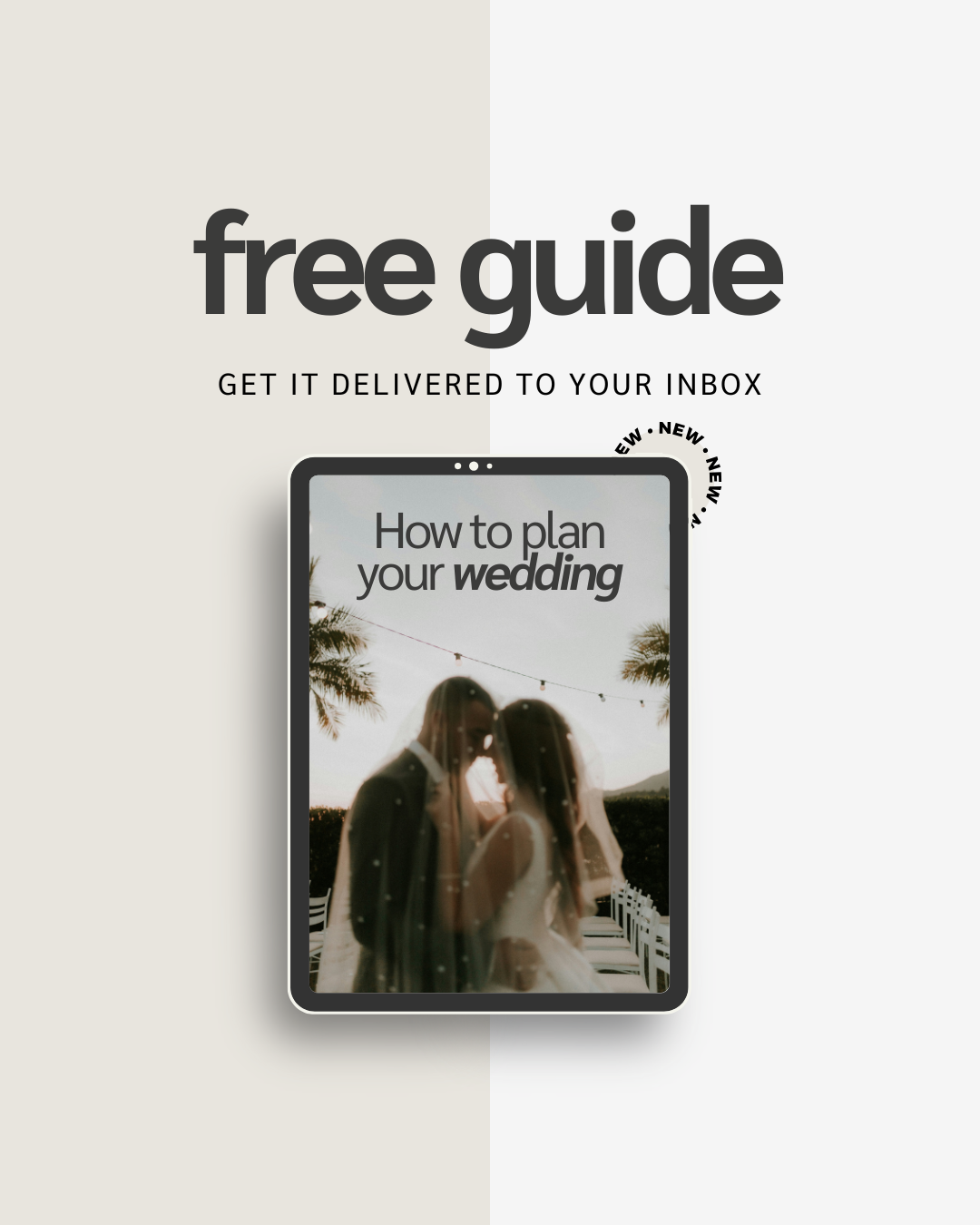
A wedding guide that explains how things work. A downloadable resource that answers questions they didn’t know how to ask. Something that helps them feel more informed and more confident before they take the next step.
This is the bridge.
It doesn’t push people forward. It gives them somewhere solid to stand while they decide.
What to create:
A lead magnet (guide, checklist, resource)
Something genuinely helpful that solves a real problem
(e.g. pricing guide, planning timeline, “what to expect”)
A clear entry point on your website
Make it easy to find and download—don’t bury it
A simple opt-in form
Low friction, low commitment
Why it matters:
This is your “stay connected” moment. Instead of losing them, you bring them closer... on their terms.

Middle of Funnel - Nurture: The Trust Builder
Once someone engages beyond your website, the relationship begins to take shape.
They start to see how you communicate. How you think. How you handle the details. They begin to build a sense of what working with you would actually feel like.
This is where familiarity does its work.
Not through pressure, but through consistency.
A handful of thoughtful, well-timed touchpoints can shift someone from “they seem good” to “we trust them.” And that shift is what makes the decision feel safe.
What to create:
A short email sequence (3–5 emails) sent to those who download your lead magnet
Common concerns (and how you handle them)
Behind-the-scenes/process
Social proof/testimonials
Invitation to take the next step
Story-driven case studies or real weddings
Show outcomes, not just pretty images
Testimonials that reflect experience (not just talent)
Focus on calm, trust, ease, and communication
Why it matters:
This replaces silence with reassurance. Instead of cooling off, couples feel more confident the longer they stay connected to you.

Bottom of Funnel - Decision: The Natural Yes
When the earlier stages are doing their job properly, the final step feels surprisingly easy.
The enquiry doesn’t come from confusion or comparison. It comes from recognition. The sense that this already fits, that the decision has been gently forming in the background.
At that point, you’re not convincing anyone.
You’re simply continuing a conversation that already makes sense.
What to create:
A simple, low-friction enquiry form
5–7 fields max. Enough to understand the basics, not enough to overwhelm them.
A strong first reply email
Warm, structured, and reassuring. This sets the tone for the entire relationship.
A clear invitation to a discovery call or meeting
Frame it as a collaborative, low-pressure conversation.
(“Let’s talk through your plans and see if we’re the right fit.”)
A discovery call structure
Not a casual chat, but a guided conversation that builds clarity and confidence.
You’re helping them make a decision, not interrogating them.
A clear next step after the call
Proposal, booking link, or contract—no ambiguity, no loose ends.
Subtle availability or urgency cues
A sense of capacity without pressure (“I take on a limited number of weddings…”)
Why it matters:
Even at this stage, uncertainty can creep in if the process feels vague. A well-structured decision phase turns what could feel like a big commitment into a natural next step. When couples feel guided and supported here, booking doesn’t feel like a leap—it feels like the obvious continuation of what’s already been building.
Where Sales Funnels Tend to Break
Most problems don’t come from lack of effort. They come from effort being placed in the wrong part of the journey.
Some vendors ask for commitment too early, offering no gentle entry point for couples who are still finding their footing. Others create a strong first impression, then disappear after sending pricing, leaving couples to process everything on their own. And many rely on websites that explain what they do, but don’t help people decide. Pages that list inclusions without guiding the choice, or showing what the experience will actually feel like.
In each case, the result is the same. The path becomes harder to follow. And when something feels harder than it needs to be, people step away.
What a Strong Sales Funnel Actually Changes
When this is working well, the shift is noticeable.
Enquiries feel warmer and more specific. Couples arrive with context and clarity. Conversations move forward more easily, with less back-and-forth and fewer basic questions.
The business itself becomes more predictable.
Most importantly, you stop feeling like you have to persuade people. Because by the time they reach out, much of the decision has already been made.
The Real Takeaway
If your bookings feel inconsistent, it’s rarely because people aren’t finding you.
It’s because too much of the decision is being left up to them.
A well-designed sales funnel doesn’t just improve conversion, it takes pressure off your entire business. It replaces constant explaining with a clear structure. It reduces back-and-forth. It stops you from chasing, second-guessing, and wondering where enquiries went quiet.
Instead, it does what good systems are meant to do. It carries people forward.
With a good sales funnel, the right couples don’t need convincing because they’ve already been guided. They arrive with context, with trust, with a sense that this makes sense for them.
It creates a booking process that flows, instead of stalls.
Because the vendors who book consistently aren’t just visible.
They’ve built a business that’s easy to move through, and even easier to say yes to.